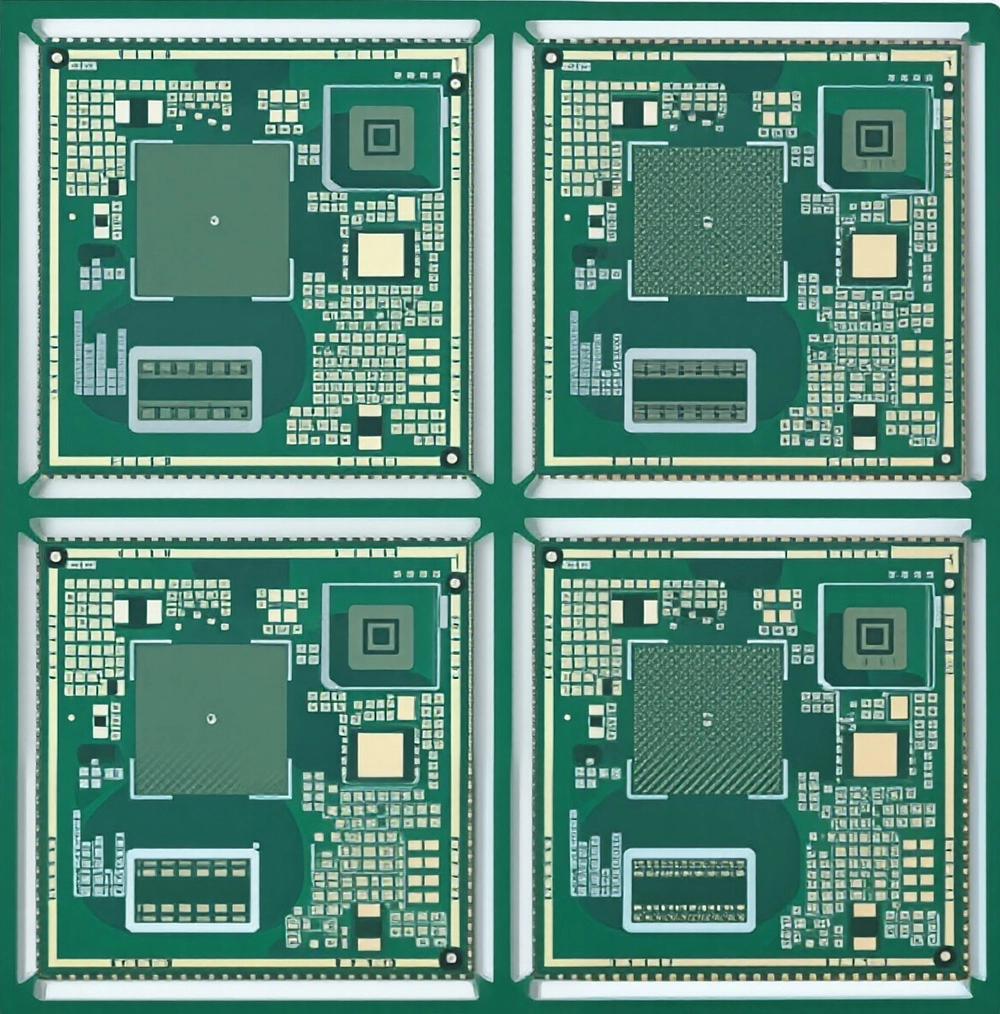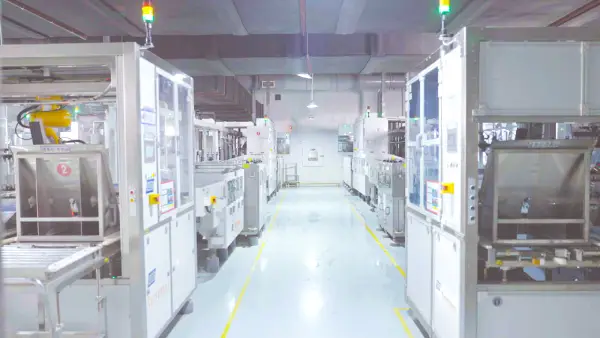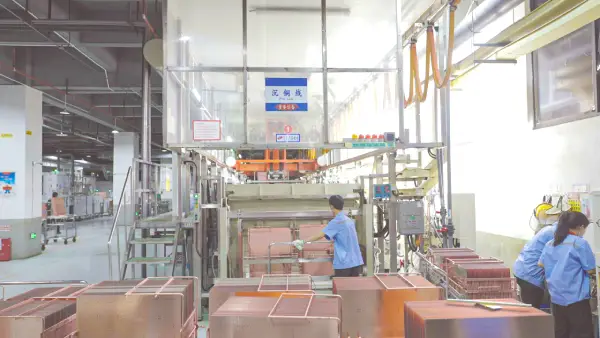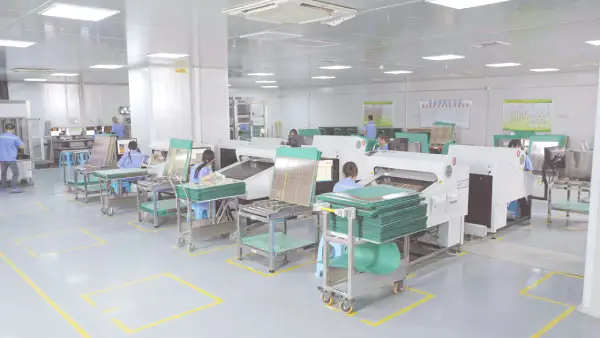

KnownPCB have 18-year experience in ENIG PCB OEM manufacturing. ENIG PCB refers to a printed circuit board that undergoes the electroless nickel immersion gold surface treatment. It is commonly called chemical nickel gold or immersed gold board, too.
| $ 0.99-1.7(Depending on Design)
Excellent Surface Flatness for Fine-Pitch Components ENIG (Electroless Nickel Immersion Gold) finish provides an exceptionally flat and smooth soldering surface, making it ideal for BGA, QFN, CSP, and other high-density assembly applications. Superior Corrosion Resistance and Shelf Life The gold layer protects the nickel surface from oxidation, ensuring stable solderability and extending PCB storage life compared with traditional surface finishes. Reliable Solderability and Wire Bonding Performance ENIG PCBs offer consistent solder joint quality and excellent compatibility with SMT assembly processes, supporting both prototype and volume production requirements. Suitable for High-Reliability Industries Widely used in telecommunications, industrial control, automotive electronics, medical devices, aerospace, and high-performance consumer electronics where long-term reliability is critical. Talk to a PCB Engineer |
Know More About Our Factory Quote for OEM |
|
 |
Thickness is strictly controlled within 3-6 μmaccording toIPC standard.This thicknesscanperfectly reduce the quality risk of copper diffusion corrosion and stress cracks.
The micro-etching depth can be control within 3-5μm. This level of depth can not only enhance the adhesion but also ensure the integrity of the circuit.
Proper replacement interval of the nickel bath can be helpful, like 5-10 turnovers. Also, adding stabilizers can reduce galvanic corrosion. This can keep pH values within the optimal range to ensure good quality of the final products. |
The nickel-gold layeris very smooth, compared to theunevenness of HASL. It isperfectly suitable for BGA, QFN, 0201/01005 and other micro-components with a pitch of 0.4mm or less. This significantly improves the assembly accuracy and solder paste printing quality.
The surface thin gold layer, which is 0.05 to 0.1μm, effectively isolates the product from air. It protects the underlying nickel layer from oxidation. Under normal storage conditions, its lifespan can reach more than 12 months.
The gold layer has low contact resistance and corrosion resistance. This makes it suitable for scenarios requiring frequent plugging or micro-current transmission, such as button contacts, and gold fingers.
Heavy copper PCB suits modern electronic products with dense circuitry and small pads.
Automotive electronics, industrial control, communication base stations, and medical equipment, require heavy copper PCB to keep long-term stable operation.
Heavy copper PCB Fully meets RoHS standards. It eliminates the risk of lead pollution.
The core differences between OSP (Organic Solder Protector) and ENIG (Electrochemical Nickel Immersion Gold) lie in their protection mechanisms, surface smoothness, storage life, and cost. OSP is a low-cost, short-cycle temporary protection solution, while ENIG is a high-reliability, long-cycle permanent protection solution.
ENIG and HASL (Hot Air Soldering Leveling) are two mainstream surface treatment processes for PCBs. The core differences lie in surface flatness, cost, and applicable scenarios. ENIG produces an extremely flat surface but is expensive. And it is suitable for high-density, fine-pitch components. HASL is low-cost but has an uneven surface. And it is for conventional through-hole and large pad components.
Their difference lies in their deposition principles, gold layer hardness, and application scenarios. The former makes current deposition by electric. This greatly contributes to forming a thick, wear-resistant gold layer, which is suitable for insertion and removal. The latter is made by chemical reaction. It produces a thin and flat gold layer suitable for soldering.
ENEPIG included an extremely thin palladium layer between the nickel and gold layers, while ENIG does not. This solves the black pad defect of ENIG. And it improves wire bonding reliability. By the way, the cost of ENEPIG is higher than ENIG.
Proven by 7 industries, 4000+ customer projects
Please contact us at sales@knownpcb.com, ask for engineering support here or use the form below to reach out to KnownPCB | Get In Touch Today |