
Blog & Design Guide

In the electronics manufacturing industry, PCB prototyping is a critical link between product design and volume production. Factors such as MOQ, manufacturing processes, value-added services, and supply chain coordination directly affect R&D efficiency and cost control. Let's take a closer look at MOQ and typical quantity to balance cost in PCB prototyping, small-batch trial production, mass production.
The minimum order quantity of PCBs prototyping needs to be determined comprehensively based on factory policies, process complexity, and cost structure. Different strategies should be adopted for different stages of demand.
•Functional testing requirements: After completing the PCB design, electronic engineers usually need to make a small number of PCB prototypes for hardware debugging, programming, and preliminary functional verification. At this time, some suppliers accept PCB prototype orders as low as 1–5 boards. However, ordering 5–10 boards is often more practical for testing and cost allocation.
•Cost breakdown : Engineering costs account for a large proportion of PCB prototyping costs, while the price per piece decreases as the quantity increases. For example, the unit price of 10 samples may be 40%-60% lower than that of a single piece, but if only 1-2 pieces are needed, the factory may refuse to accept the order or raise the unit price due to difficulties in allocating engineering costs.
•Using PCB panelization to reduce unit cost : If the design contains multiple identical sub-boards (such as array panelization), PCB panelization technology can be used to integrate 10 small boards into 1 large board and ship them as a whole large board (such as 5 large boards = 50 small boards), further reducing the cost per piece.
• User testing and exhibition samples : After the product's functionality is verified, 50-200 units need to be produced for user testing, reliability verification, or exhibition display. The unit price at this stage is 30%-50% lower than that for prototyping, and it can expose design flaws in advance, avoiding mass production risks. • Process adaptability : Some factories set process restrictions for small batch orders (such as size ≤10cm², number of layers ≤2). It is necessary to confirm the process standards before placing an order to avoid extra costs due to exceeding specifications. PCB-prototyping-SMT-MOQ PCB PROTOTYPING multilayer PCB 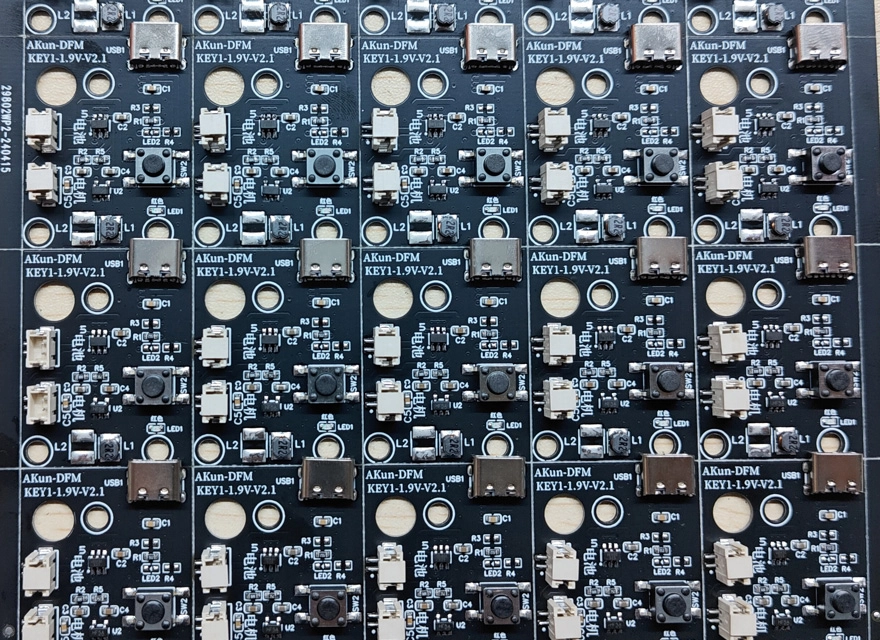
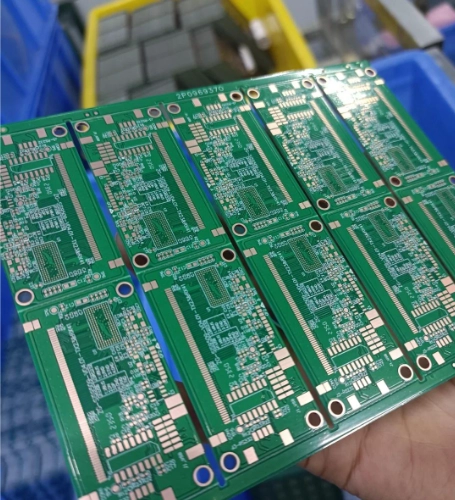
•Mass production : When the product enters the mass production stage, orders of 500 PCB boards or more typically achieve a lower unit cost. At this time, it is necessary to focus on the utilization rate of the PCB borad (improve panel utilization to reduce material waste) and the production cycle (5-15 days, the larger the quantity, the longer the delivery time).
•Special process requirements: If high-end processes such as aluminum substrate, impedance control, buried and blind vias are involved, the minimum order quantity (MOQ) needs to be communicated with the factory in advance. Some processes may require more than 1,000 pieces per batch.
This article is focus on the minimum order quantity (MOQ) requirements for together with BOM sourcing, SMT assembly, and component supply services to provide an integrated PCB manufacturing and assembly platform. It also highlights KnownPCB, a one-stop supplier for PCB fabrication, BOM sourcing, and SMT assembly. — www.knownpcb.com.
Request for a tech support
October/14/2026How to Choose a PCB Manufacturer: Verify the Evidence
June/12/2026PCB Vs PCBA: Differences, Definitions and Relations
April/08/2026Root Cause and Solution of PCB Surface Defects
October/14/2026HDI PCB Solder Mask: Fixing Fine-Pitch Gerber Issues
February/25/2026Rigid-Flex PCB Benefits: Fewer Connectors, Space Savings and Higher Reliability
Proven by 7 industries, 4000+ customer projects
Please contact us at sales@knownpcb.com, ask for engineering support here or use the form below to reach out to KnownPCB | Request a Manufacturing QuoteInclude your quantity, target delivery date and key requirements. File handling and NDA information. |