
Low Volume PCB Assembly Buying Guide: What to Know Before Ordering
Low volume PCB assembly helps hardware teams move from working prototypes to pilot builds and small production runs. It allows you to check the assembly process, deliver early units, and revise the design before committing to more inventory. For engineers and buyers, the main challenge is keeping cost, lead time, and build quality under control while quantities and revisions still change. Before you place an order, confirm what the quote covers, which files the manufacturer will build from, and what happens when you change the design or reorder.
Prototype vs Low Volume vs High Volume PCB Assembly
There is no fixed industry cutoff for low volume PCB assembly. For example, KnownPCB’s assembly service guide lists 10–1,000-piece projects as a low-volume use case. This is a supplier-specific guide, not an industry definition. A 100-board order can still require very different preparation depending on board complexity, component count, and process.
To help you choose the right service, here is how these three production stages differ:
| Dimension | Prototype | Low Volume PCB Assembly | High Volume |
|---|---|---|---|
| Main goal | Prove the design works | Deliver usable boards and validate assembly + test | Maximize efficiency and yield |
| Focus | Layer stack, vias, impedance, copper balance | Process stability, test flow, pre-production changes | Locked process, batch consistency, cost dilution |
| File needs | Clear build files for the agreed prototype scope | Full Gerber, BOM, centroid, assembly drawings | Approved revision with controlled changes |
Small batch PCB assembly is commonly used for pilot runs, new product introduction (NPI), custom industrial controllers, communications modules, and initial IoT product launches. It also works for products with steady demand that never reaches mass-production volumes.
The benefit is flexibility. You can limit inventory while you validate demand and gather field feedback. The tradeoff is a higher cost per board: engineering review, stencil preparation, machine programming, and test setup make the price higher. For medical, automotive, or other demanding applications, you should define the required quality controls, traceability, and supplier qualifications before requesting quotes. A small order does not reduce the board's quality requirements.
How to Reduce Costs in Low Volume PCB Assembly
NRE costs (stencil, programming, setup, engineering review) do not shrink with quantity. That is why unit price is usually higher in low volume pcb assembly. There are two practical ways to keep costs under control:
For more detail on the cost categories, see our guide to turnkey PCB assembly costs.
1. Break the Quotes into Clear Parts
When comparing low volume PCB assembly quotes, always compare total costs based on the exact same scope. A quote for bare assembly cannot be compared directly against one that includes component sourcing, IC programming, and functional testing.
Ask your contract manufacturer (CM) to structure your Request for Quote (RFQ) into four clear parts:
- PCB & Components: Specify board materials, special processes, complete Manufacturer Part Numbers (MPNs), order quantities, Minimum Order Quantities (MOQ), and approved alternative components.
- NRE & Setup Fees: Separate costs for laser stencils, machine programming, production line setup, and engineering reviews.
- Assembly Labor: Break down fees for Surface Mount Technology (SMT), Through-Hole (THT/DIP), manual soldering, and any special processes.
- Testing & Delivery: List charges for optical inspection, functional testing (FCT), firmware programming, custom packaging, and shipping.
2. Design for Lower Assembly Cost
Reviewing the layout before production can help reduce avoidable handling, setup, and rework during low-volume runs:
- Use Standard Packages: Where space and performance allow, use common packages such as 0603 or 0805. Check component availability and the assembler’s routine capabilities before selecting very small or unusual packages. A common package does not guarantee that the exact part is held in stock.
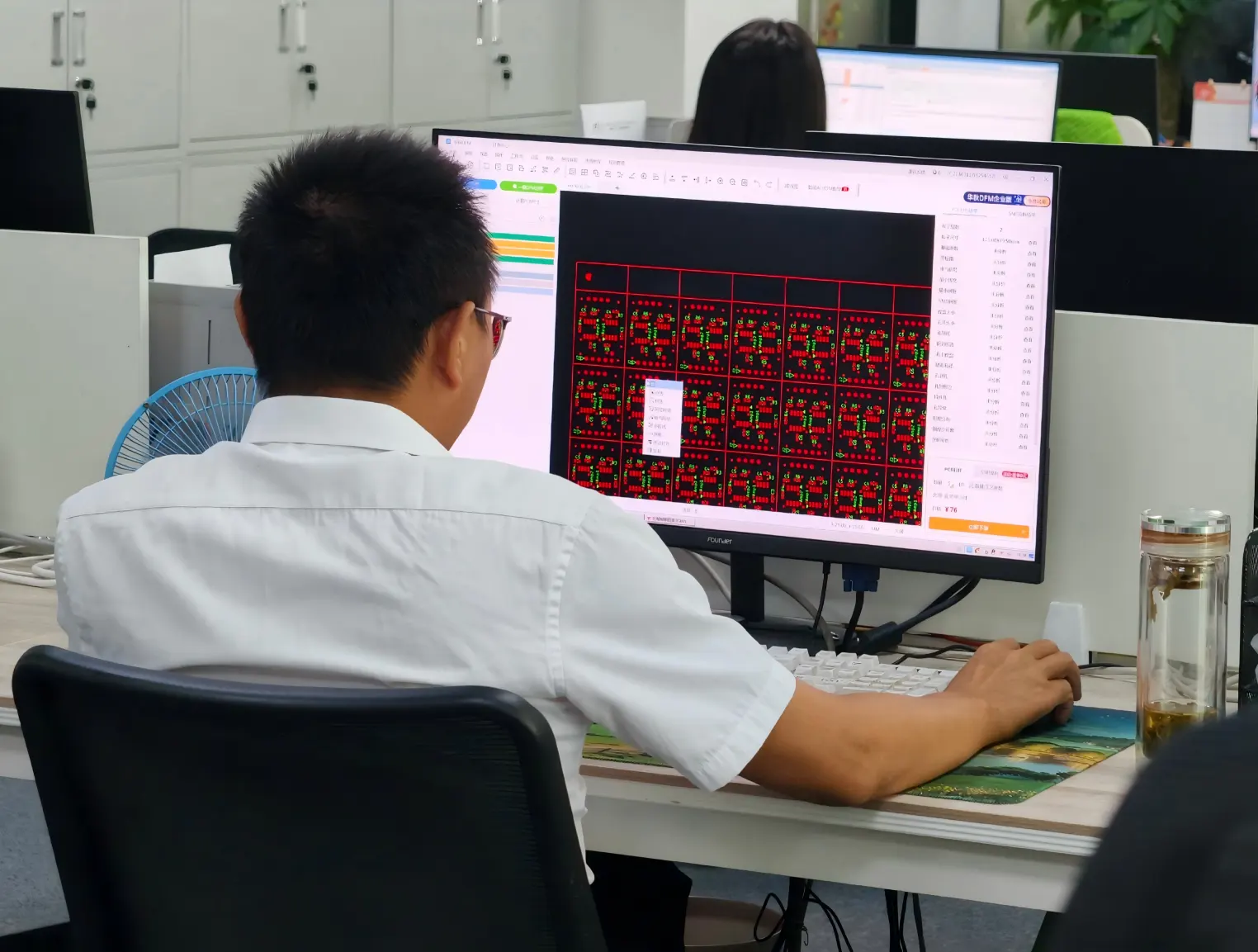
- Optimize Panel Design: Agree on panel dimensions, handling rails, breakaway features, and fiducials with the assembler before PCB fabrication. A suitable panel can reduce manual handling during printing, placement, and soldering.
For example, KnownPCB’s SMT specifications list a standard minimum PCB size of 30 × 30 mm and a fiducial distance of at least 3 mm from the board edge. If your individual board is smaller, ask the team to review panelization and handling before you order the bare PCBs.
- Reduce Unnecessary Double-Sided Placement: Keep components on one side where the design allows it. Double-sided SMT generally adds another placement and soldering sequence, but it does not automatically double setup or machine costs. Ask the assembler to compare the actual cost before changing the layout.
How to Manage First Orders, Revisions, and Reorders
Small batch orders change frequently. Treating a first build, a design revision, and a repeat order the exact same way often causes unexpected costs and delivery delays.
- First Orders: Focus on freezing the data. Make sure your Gerber files, BOM, Centroid file, and assembly drawings match the exact same version. Clearly mark Do Not Populate (DNP) parts, component polarity, firmware files, and test steps. Save the record of all engineering review notes for future traceability.

- Design Revisions: Evaluate work already in progress before making changes. Modifying pads or panel layouts usually requires a new stencil. Changing components may involve canceling procurement orders, adjusting programming or updating test protocols. Never assume changes are free just because the boards have not shipped yet.
- Repeat Orders (Reorders): Verify what can be reused before releasing the PO. Even if the PCB layout stays the same, check the BOM, firmware, component storage history, and tooling status. Request an excess inventory report showing usable quantities, storage conditions, and shortages before confirming price and lead time.
Moisture-sensitive parts need particular attention. In its MSL Ratings and Reflow Profiles application report, Texas Instruments lists a floor life of 168 hours for MSL 3 parts at 30°C and 60% relative humidity after opening the dry pack. This is an exposure limit under stated conditions, not a general shelf-life limit. Check each part’s MSL, cumulative exposure time, and storage records; apply the appropriate drying procedure if required before reflow.
Using the same CM can reduce repeat preparation when approved stencils, programs, and process records remain valid. Before reordering, confirm that the PCB revision, BOM, firmware, test requirements, and tooling are still suitable. Reuse can save work, but the final price and delivery date still depend on materials, scheduling, and any new setup or testing needs.
How to Choose a Low Volume PCB Assembly Manufacturer
When choosing a low volume PCB assembly manufacturer, verify that it can manage sourcing, production, and testing for your actual order quantity, and support future design revisions and reorders.
| Evaluation Area | Key Questions to Ask Before Ordering |
|---|---|
| Order Terms & MOQ | Do they accept your exact quantity? Does "No MOQ" apply to assembly too, or just bare PCBs? Are there component purchase multiples or attrition rules? |
| Pricing Structure | How are stencils, line setups, programming, and test fixtures billed? How do prices scale with volume, and are NRE fees waived on reorders? |
| Engineering Support | Will engineers check BOMs, footprints, and polarity before production? Do they offer actionable DFM feedback and First Article Inspection (FAI)? |
| Scheduling & Lead Time | How do they schedule small runs? When does the lead-time clock start, and how do part shortages or design holds affect delivery? |
| Testing Capabilities | What inspection methods (AOI, X-Ray, FCT) match your board risk and batch size? Are custom test jigs required, and are acceptance criteria clearly defined? |
| Inventory & Revision Control | Do they archive production files, programs, and stencils? Who owns excess components, how long are they stored, and how are revision fees calculated? |
Also distinguish routine capability from features that need a separate review. KnownPCB’s PCB assembly capabilities list 0201 packages (0.6 × 0.3 mm) and 0.4 mm BGA pitch as standard, while 01005 packages and BGA pitch from 0.3 mm to below 0.4 mm are listed as limited capability. For a compact sensor board using these finer features, confirm the process and inspection requirements before agreeing to a delivery date.
Define acceptance criteria as well as inspection equipment
“IPC compliant” alone does not define the acceptance scope. IPC-A-610J — Acceptability of Electronic Assemblies provides visual quality acceptance requirements for electronic assemblies. State the agreed standard revision and product class in the RFQ, then define functional testing and any X-ray inspection requirements separately. For example, a 50-board controller order still needs a clear decision on whether the quote includes workmanship inspection only or also firmware loading and a functional test. Passing a visual inspection does not demonstrate that the board performs its intended function.
Navigating small-batch manufacturing doesn't have to slow down your product launch. If you are preparing for your next EVT build, pilot run, or initial commercial batch, upload your Gerber files and BOM today for a free DFM review and transparent turnkey quote. Our engineering team will help you catch assembly risks early, optimize component sourcing, and get your boards built on schedule.
Frequently Asked Questions
1. What is considered a low volume PCB assembly order?
There is no universal cutoff. Orders of 10, 50, or 200 boards are examples of small builds. Confirm how the supplier handles your quantity and board complexity.
2. Does low volume PCBA include PCB fabrication and component sourcing?
Yes. Full turnkey PCB assembly covers bare board fabrication, component procurement, and assembly. However, you should confirm IC programming and functional testing separately.
3. What files are required for a low volume PCBA quote?
You typically need Gerber files, NC drill files, a complete Bill of Materials (BOM), Pick-and-Place (Centroid) data, and assembly drawings. Provide firmware hex files and test procedures if flashing or testing is needed.
4. What is the typical lead time for small batch PCB assembly?
Lead time depends on component availability, board complexity, and testing needs. Even for a 20-board run, one backordered IC can delay the entire build. Always confirm if the quoted lead time includes component sourcing and when the clock officially starts.
5. Can low volume assembled PCBs be used in final commercial products?
Yes. Small batches can support commercial deliveries once the product meets its required design validation, inspection, testing, and applicable compliance requirements. Batch size alone does not determine readiness for end use.