
Blog & Design Guide

An HDI PCB manufacturer evaluation should start with the construction you need to buy. A factory can make fine lines and laser holes yet have little relevant evidence for your particular stack of filled microvias. The useful question is whether its proposed process, qualification samples, and release records represent the same build. A general equipment list cannot answer that.
Prepare a sketch of the layer connections before comparing suppliers. Identify the microvia families, whether they align or offset, their target layers, and any buried core vias. Include the planned assembly thermal exposure. These details give engineering a common object to assess and stop purchasing from comparing quotations for different manufacturing routes.
On this page
Ask each candidate to mark its proposed build directly on the same stackup. A reply should show which layers are laminated together at each stage and where drilling, filling, and planarization occur. If the proposal changes your interconnection path, treat it as a design change requiring review. Similar layer counts do not establish equivalent constructions.
For the commercial scope, use KnownPCB's HDI PCB manufacturing page. Keep this evaluation attached to the specific structure being quoted. Published capability categories are a starting point for engineering discussion; they do not make every combination of smallest features, copper thickness, board size, and build-up sequence a routine production order.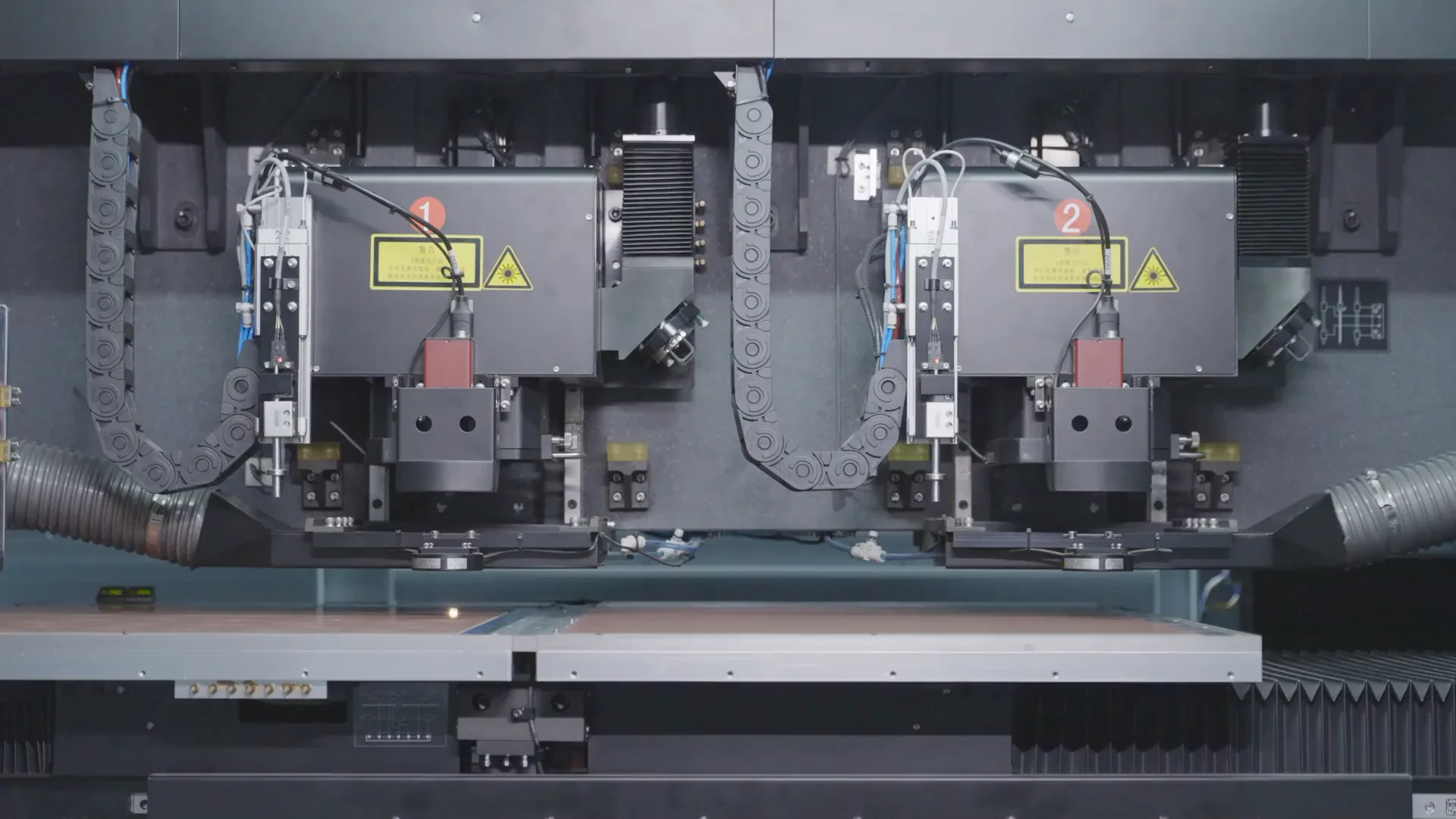
Laser drilling equipment is process context, not evidence of a particular microvia diameter or qualified structure.
| Supplier statement | Evidence to request | What the buyer checks |
|---|---|---|
| We support stacked microvias | A section and process route for a comparable stack | Layer span, interfaces, filling method, and qualification relevance |
| We inspect every batch | The agreed lot release plan and example report | Which characteristics are measured and how results identify the lot |
| We can use an equivalent material | A written substitution review | Thickness, processing, electrical requirements, and qualification impact |
| The design passed before | A documented relation between the old and new builds | What stayed the same and what needs additional review |
Use the table to find missing information, rather than assign a universal numerical score. A supplier may provide a strong response for one via family and an incomplete response for another. Record that distinction. It is more useful than averaging several unrelated strengths into a single approval rating that hides the unresolved interconnection.
A microsection can show geometry and plating at the location that was cut. Request the sample identity, section location, orientation, and inspection stage with the image. A cropped photograph without these details makes it difficult to decide whether you are looking at your target interface, another via family, or a development sample made with a different process.
IPC's 2019 warning about microvia reliability describes failures that escaped earlier acceptance and appeared later under thermal exposure. That history supports asking for evidence appropriate to the construction and assembly conditions. It does not establish that every stacked structure fails or that a single test can qualify all HDI boards.
Discuss electrical monitoring during the agreed thermal evaluation when the application requires it. The quotation should identify whether this is included, an additional qualification activity, or work requiring an outside laboratory. Keep a room-temperature netlist test, a section inspection, and a monitored thermal test as separate records because they answer different questions.
A useful coupon represents the production interconnect. Check the layer sequence, interfaces, fill process, and materials against the board drawing. Ask how coupon results connect to the manufacturing lot. A convenient coupon with fewer interfaces may be easy to test, but its relationship to the most demanding production structure still needs an engineering explanation.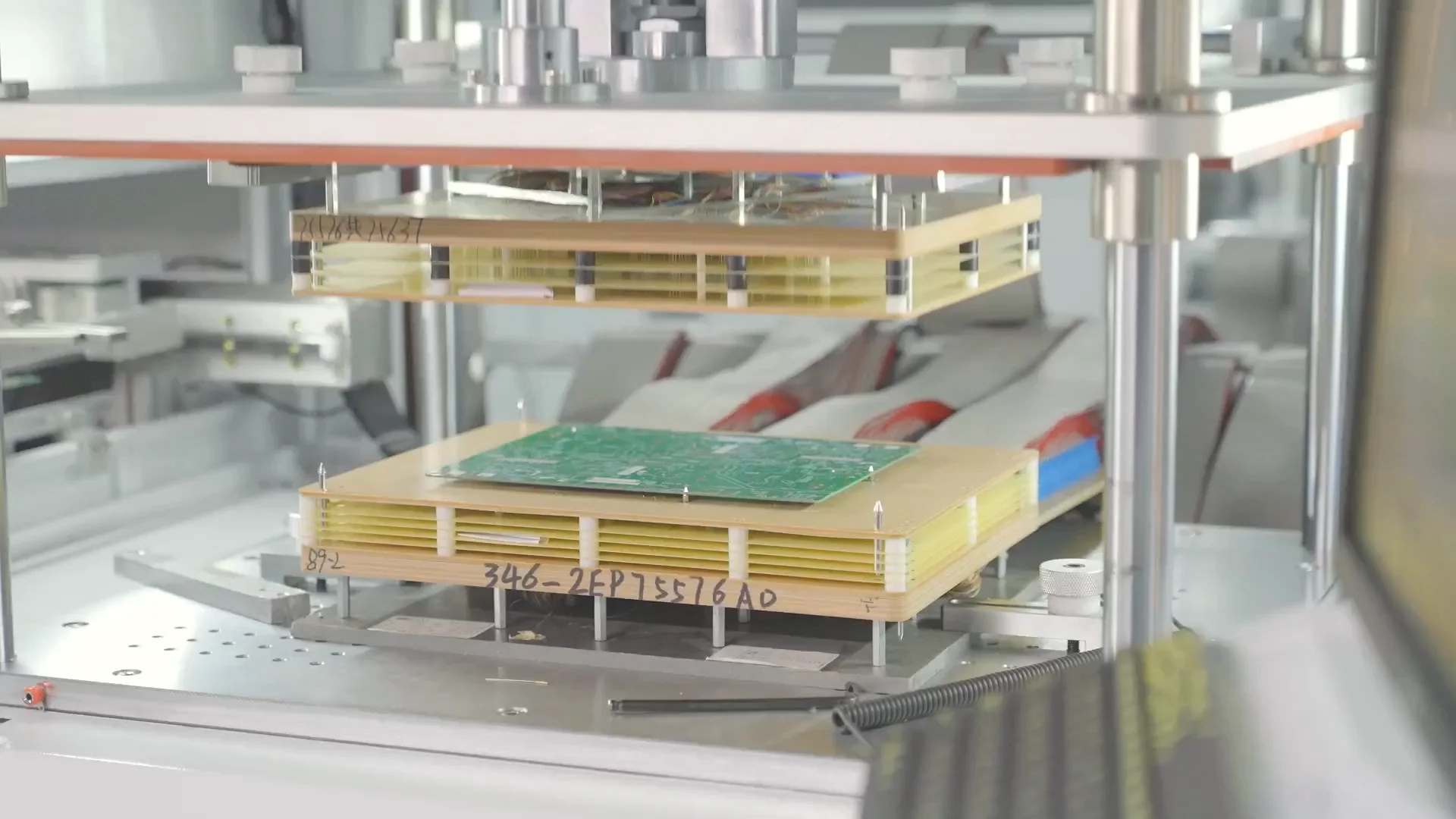
Bare-board electrical testing checks the agreed netlist; it does not replace construction-specific mechanical or thermal qualification.
The supplier may recommend a different dielectric thickness or interconnect arrangement to improve manufacturability. Review the consequence for BGA escape, reference planes, impedance, and final thickness before accepting the recommendation. KnownPCB's article on HDI stackup choices and manufacturability covers those design tradeoffs; the procurement decision here is who approves the resulting construction and its evidence.
Keep proposed substitutions visible. A resin system, copper foil, or bonding material can have a different processing window even when an electrical property looks similar on a datasheet. Name the characteristics that the new material must meet, request the supplier's assessment, and decide whether existing qualification remains applicable. Avoid blanket permission to substitute materials without notification.
Find out which company and production site perform the critical steps. Outsourced operations are not an automatic rejection, but the control plan must identify responsibility for records, nonconformances, and change notification. A procurement contact should be able to obtain a technical answer from the people responsible for the actual build rather than repeat an unqualified sales statement.
Certificate review belongs alongside this work. ISO's explanation of ISO 9001 in the supply chain distinguishes management-system conformity from product conformity. Check the site and activities covered by a certificate, then review the construction evidence separately. Neither an IPC requirement on a drawing nor a quality-system certificate is a lifetime guarantee for a particular microvia interface.
The first purchase order should refer to the approved fabrication package, stackup revision, applicable acceptance requirements, and agreed report set. Resolve whether samples for destructive inspection are extra to the delivered quantity. If special qualification affects lead time, put that activity into the schedule rather than expecting it to appear inside an ordinary production promise.
On receipt, compare the delivered reports with the approved plan. Check lot identifiers and construction revisions before reviewing individual measurements. Missing traceability is a reason to request clarification, even when the measured values look acceptable. The connection between a result and a delivered board is part of the evidence, not an administrative detail to reconstruct after a failure.
Agree how an engineering hold is released. If the first lot needs a construction check before shipment, identify the report, reviewer, and decision point. A production team should not have to infer approval from the absence of a reply. The same record should state whether the decision releases this lot only or also establishes the basis for future orders.
Separate the cost of evidence from the cost of the board when reviewing quotations. One offer may include a dedicated qualification coupon while another includes only ordinary lot inspection. Ask the second supplier to price the missing scope before treating it as a cheaper equivalent. The comparison then reflects the construction and assurance activities the project actually needs.
For repeat orders, define which changes require notice: production site, material system, via construction, critical processing, and inspection arrangement. The supplier should explain the effect before the change enters production. A successful prototype provides evidence for its own construction and route. Repeatability depends on preserving those conditions or assessing changes when they occur.
To begin a project-specific assessment, send KnownPCB the stackup and via-connection drawing with the assembly conditions and required records. Ask for a response against that package. It gives the buyer a clear basis to accept, revise, or reject the proposed build before manufacturing begins.
March/26/2026What Is an Embedded Copper coin PCB and When Should You Use It?
April/16/2026High-Current Heavy Copper Design & Manufacturability

September/06/2026High Current PCB Design: Current Paths, Copper, Vias & Thermal Limits
April/15/2026Why Stackup Is the Starting Point of a Manufacturable HDI Board

October/13/2026Multi-Design PCB Panelization: IDs and Revisions
Proven by 7 industries, 4000+ customer projects
Please contact us at sales@knownpcb.com, ask for engineering support here or use the form below to reach out to KnownPCB | Request a Manufacturing QuoteInclude your quantity, target delivery date and key requirements. File handling and NDA information. |