
Blog & Design Guide

Choosing a PCB manufacturer is easier when you compare evidence, not slogans. A capability page may say a factory can build a particular board type, but that statement does not tell you which site, process, acceptance standard or inspection record applies to your order. The practical question behind how to choose a PCB manufacturer is whether the supplier can show a clear link between your board requirements and the evidence it will use to build and release the lot.
This is a supplier-evaluation checklist for bare printed circuit boards. It is not a ranking of manufacturers or a guide to assembly services. Start with your drawing and acceptance requirements, then ask each candidate for evidence that can be checked against the same baseline.
In this article
Before speaking with a supplier, identify what matters on the specific board. List the construction, material, layer stack-up, dimensions, finish, controlled board requirements, acceptance criteria, required tests and delivery form. Mark which items are mandatory and which are preferences. A general statement such as “high quality” cannot be verified until it is connected to a drawing note, test method or acceptance document.
For each requirement, ask what evidence would demonstrate the supplier understands and can meet it. A useful evidence request has four parts: the requirement, the process or inspection that addresses it, the record you will receive, and the point at which any deviation must be approved.
| Supplier claim | Question to ask | Evidence to review |
|---|---|---|
| The board type is within capability | Does the stated process cover this material, construction and feature? | A capability record tied to the same product scope and units |
| The lot will be inspected | Which characteristics are checked, by what method, and with what coverage? | An inspection or test-record example with identifying fields |
| The factory is certified | Which legal entity and site are covered, and what activities are in scope? | A current certificate verified with the issuer or official directory |
| Changes are controlled | Who approves a drawing deviation or substituted process? | A sample change or nonconformance workflow, with confidential details removed if needed |
A product photograph can help identify visible board details, but it cannot establish material, layer count, copper thickness or test results. Use drawings and records for those claims. 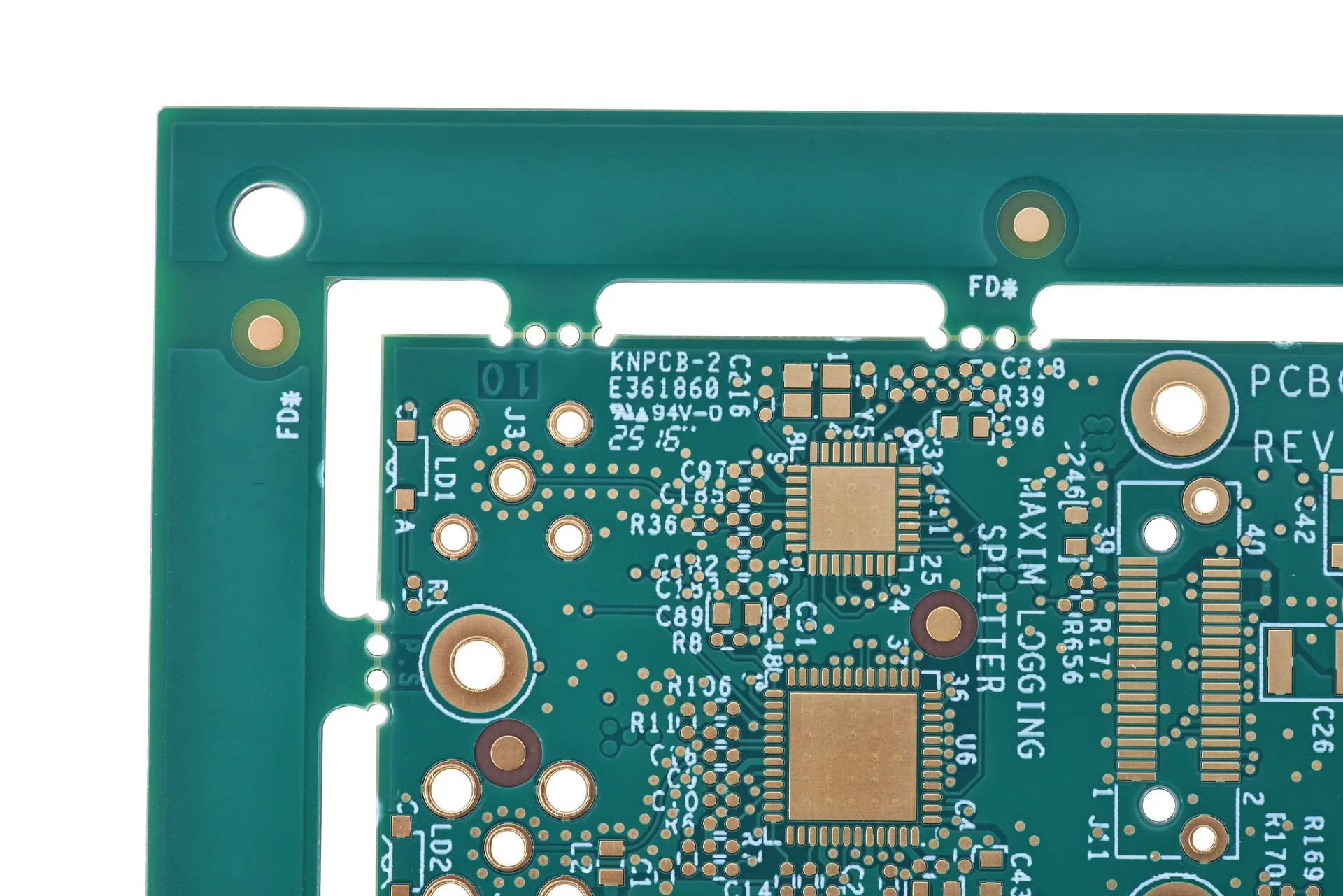
A product image can support a visual discussion, but it does not replace drawings or lot-specific records.
Ask the supplier to connect each relevant capability claim to your board’s actual requirement. A large maximum value does not automatically mean the combination of material, stack-up, finished thickness and local pad or via requirement is covered. Request the range, units, measurement method, product scope and any stated conditions. If the supplier provides only a broad maximum, ask what has been qualified as a regular process and what would need engineering review.
Make sure every capability statement refers to the facility that would manufacture the order. A corporate profile, partner network or separate assembly site does not prove that a specific bare-board process is performed at the named factory. Ask who owns the process, where the board will be built, and whether any manufacturing step will be subcontracted.
For a complex board, ask the supplier to explain the process route against the drawing rather than replying with a generic “can do.” The response should identify any open assumption, tolerance or special test. A clear request for clarification is often more useful than a broad promise because it gives engineering a decision to make before the order is released.
When a supplier claims an accredited management-system certificate, check the exact company name, covered site, standard, scope, status and issuing bodies. The IAF CertSearch guide describes validating an individual accredited certificate by company name or certificate ID. It also explains that certification data must be uploaded before a record is searchable. If a result is missing or unclear, ask the certification body to confirm the current certificate details rather than treating a logo or an empty search as proof.
If a supplier uses a UL mark or claims a UL-listed product, request its file number and the relevant product category. UL’s certification resources point buyers to Product iQ for manufacturer certification and product-category information. Verify the listing and any limitations for the product being supplied. A mark on a different product does not automatically cover your board.
A product standard, a management-system certificate and a safety listing are different kinds of evidence. A manufacturer may reference a performance specification without holding a certificate from the standard publisher. Check what the document applies to before treating it as supplier qualification or order acceptance.
For rigid bare boards, IPC’s IPC-6012F overview describes a qualification and performance specification for rigid printed boards. It addresses the product, not the factory’s general quality-management certification. If your purchase requires an IPC performance class, identify the applicable document, revision and class in the order package.
Ask what records can identify the board revision and manufacturing lot. Depending on the order requirements, these may include a certificate of conformance, electrical-test summary, dimensional inspection, material record, inspection report or nonconformance disposition. The buyer should specify which records are required; not every document is automatically included with every order.
Review a redacted example or blank report template before selecting the supplier. Check whether it records the board or panel ID, revision, lot, inspection method, units, acceptance criteria, result and disposition. A screenshot of inspection equipment does not show those fields. A report without the applicable requirement or board identity is difficult to use as receiving evidence.
Also ask how a nonconformance is handled. Who is notified? Who can authorize use-as-is, rework or replacement? How will a corrected lot be identified? These are project-control questions, not a request for confidential customer information. A supplier can often demonstrate the document flow without disclosing another customer’s design or report.
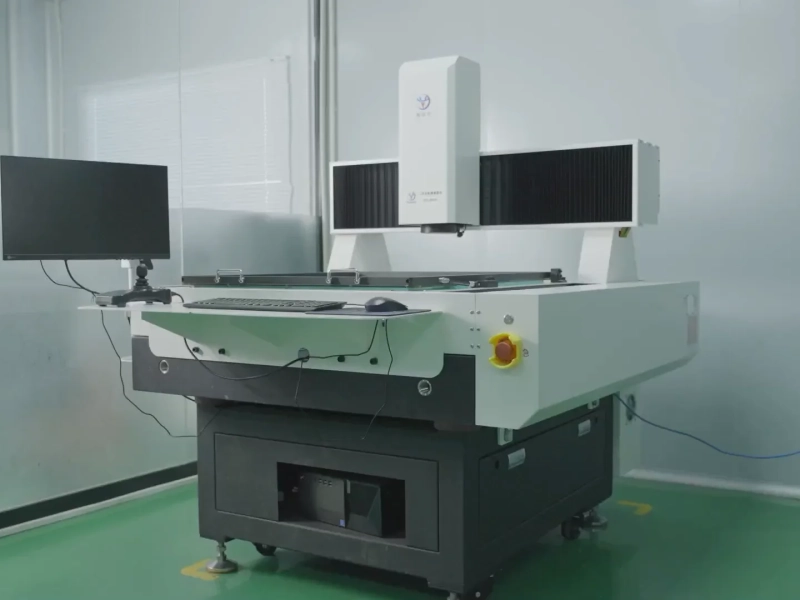
An inspection system is only one part of the evidence. The photograph below shows manufacturing equipment, not the criteria or results for a particular board lot. 
Inspection equipment is process context; the accepted criteria and lot report provide the evidence for a specific order.
Before making a supplier decision, give the candidate a controlled board package or a representative drawing excerpt and ask for a technical review within the agreed confidentiality boundary. Look for a response that points to the exact document and requirement, explains the concern, proposes a disposition and names the person who must approve it. Generic statements about “full DFM” are not a substitute for an issue list tied to your revision.
Then check that the review can be converted into a controlled release. The supplier should acknowledge the approved files, list accepted deviations, identify the required records and explain how a later change will be handled. A good evidence loop is specific: request, technical answer, customer decision, revised baseline and lot record. If one link is missing, resolve it before placing an order.
KnownPCB’s company profile and quality management page provide published background on its business and quality system. For a board-specific capability or documentation question, contact KnownPCB with the relevant drawing requirements and identify the evidence you need to review.
No. A certificate applies to a named entity, site, standard and scope. It does not prove that a particular board meets its drawing or that the required lot tests were performed.
Start with the records your drawing or purchase documents require, such as a conformance statement, electrical-test result, dimensional report or material record. Ask that each record identify the relevant board revision and lot.
Yes. Ask for a redacted example, blank template or a walkthrough of the process. The goal is to understand what evidence can be provided for your own order, not to obtain another customer’s proprietary data.
July/01/2026Power Supply PCB Board: Design Tips and Purchasing Guide
April/16/2026Common Stackup Choices For A Manufacturable HDI Board
February/25/2026High-Frequency PCB Performance: Low Dk/Df, Controlled Impedance and Low Signal Loss
October/10/2026DC-DC Converter PCB Layout: Paths, Thermal Vias and Noise

April/15/2026Why Stackup Is the Starting Point of a Manufacturable HDI Board
Proven by 7 industries, 4000+ customer projects
Please contact us at sales@knownpcb.com, ask for engineering support here or use the form below to reach out to KnownPCB | Request a Manufacturing QuoteInclude your quantity, target delivery date and key requirements. File handling and NDA information. |