
Blog & Design Guide

In a manufacturable HDI board, Return paths are often not obvious in schematics, but they actually are one of the critical points for the performance of HDI PCB.The signal quality relies not just on the signal trace itself, but also on the continuity and stability of return current paths.
A HDI stackup may provide enough routing space, but if this structure of HDI board cannot support stable return conditions, the overall HDI construction quality is still limited. This is the reason for return-path stability should be viewed as:
1. A part of HDI stackup design and quality, not as a separate layout issue.
2. A signal which does not travel alone
3. An early sign in the quality of HDI board stackup
A signal does not travel alone. Its return current also needs a continuous and low-impedance path. In HDI stackup design, it is more precise to regard a signal as an electromagnetic loop rather than just a single wire.
For this reason, signal quality do not depend only on the routing itself, but also on whether the return path can remain stable across the entire HDI board structure.
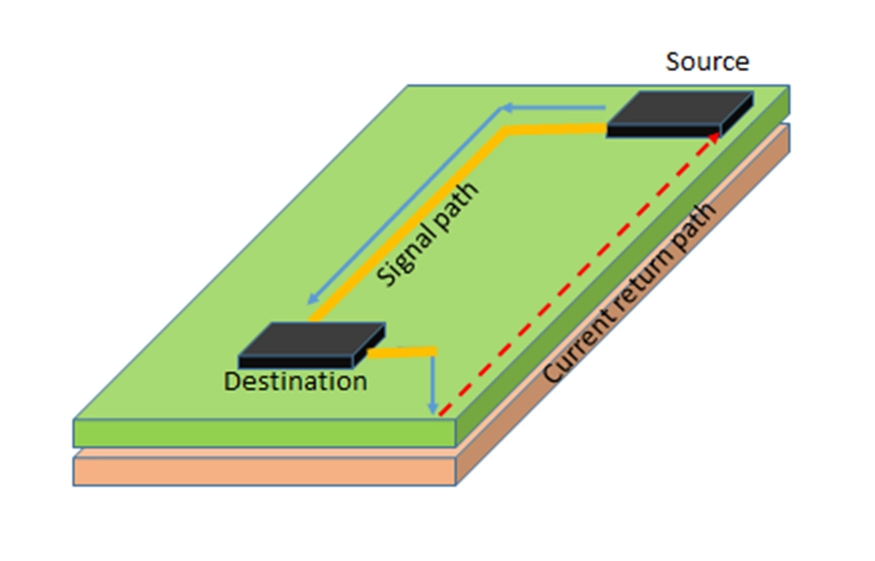
When a signal layer is close to a continuous reference plane, the return current can follow a shorter and more controlled path directly underneath the trace.
In other words, If the reference plane is split, too far away, or interrupted by structural changes, the loop inductance will increase significantly. the return path is going to become less stable. As a result, the issue of reference plane usually makes the HDI stackup design more sensitive to noise, electromagnetic radiation (EMI), and performance fluctuation.
For this reason, tha stability of return path should be treated as a late layout issue, it is an early sign of the HDI stackup quality.
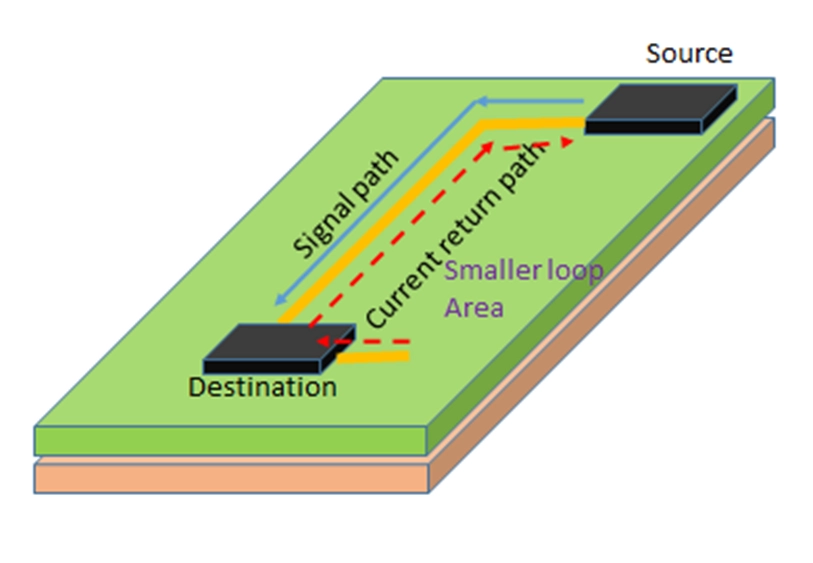
For HDI PCBs, return path stability is one of the clearest signs for a good HDI stackup design and quality. A structure of HDI board that supports stable return conditions is usually easier to control in both electrical behavior and practical implementation.
This is why return path stability should be considered from the beginning, as part of manufacturable HDI stackup planning rather than a later adjustment in layout.
For the full overview of HDI stackup, see our main article: Why Stackup Is the Starting Point of a Manufacturable HDI Board.
Request for a tech support
September/12/2026High-current PCB Via Design Solution

February/26/2026HASL vs ENIG vs Hard Gold: Cost, Solderability, Flatness and Wear Resistance
July/03/2026Single Sided PCB Board: How to Design and Purchase
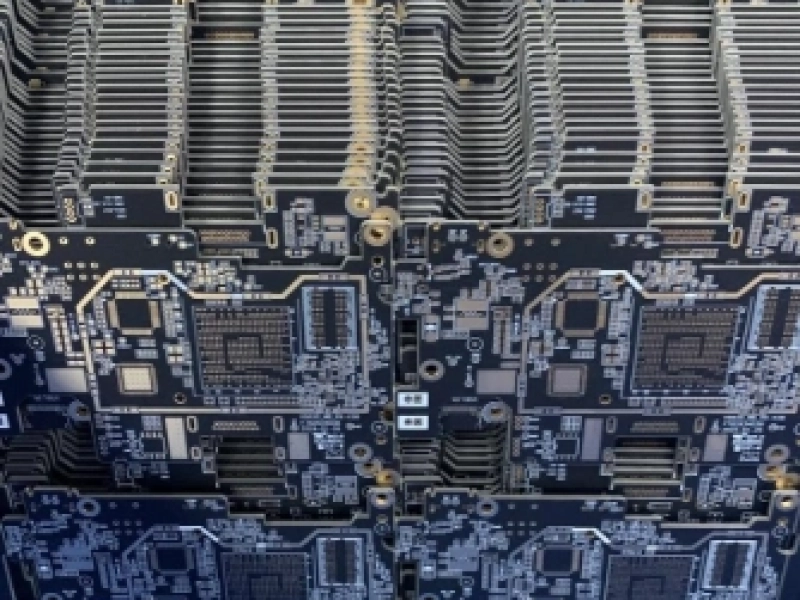
May/06/2026Industrial PCB Material Selection Guide
October/15/2026Microvia Aspect Ratio: Measure Depth and Diameter
Proven by 7 industries, 4000+ customer projects
Please contact us at sales@knownpcb.com, ask for engineering support here or use the form below to reach out to KnownPCB | Request a Manufacturing QuoteInclude your quantity, target delivery date and key requirements. File handling and NDA information. |