
LED PCBGuide
Aluminum PCB Structure, Heat Dissipation, Material Selection, and Manufacturing
Summary: This guide explains LED aluminum PCB structure, heat dissipation, material selection, design and manufacturing considerations, applications, pricing, and prototyping requirements.
The efficient operation of an electrical system greatly depends on thermal management. Unfortunately, standard fiberglass boards can’t withstand the huge amount of heat produced by high-power LED arrays.
To solve this problem, modern electronics leverage LED aluminum PCBs, also known as metal core PCBs (MCPCB) or insulated metal substrates (IMS).
The most important feature of these boards is in their structure, a layout that consists of three layers: a top copper circuit layer for electrical pathways, a highly specialized, thermally conductive dielectric layer, and a rigid aluminum base.
This intelligently arranged layout results in a low risk of heat being trapped in the boards. The thin dielectric layer absorbs the heat and distributes it evenly across the metal base, which later releases the heat outside.
This guide covers everything you need to know about the LED aluminum PCB. You’ll learn about the structure, heat dissipation properties, material selection criteria, and manufacturing processes of these boards.
LED Aluminum PCB vs FR-4: Which One Should You Choose?
The relationship between LED aluminum PCB and high-Tg FR-4 is one of
the most commonly misunderstood concepts among beginner designers, and
it would help to set the distinctions between these two types of
boards. 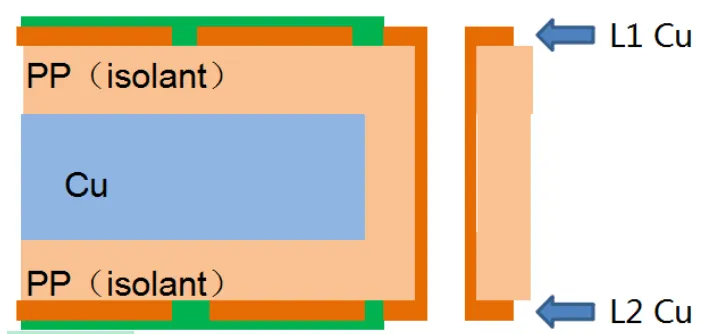
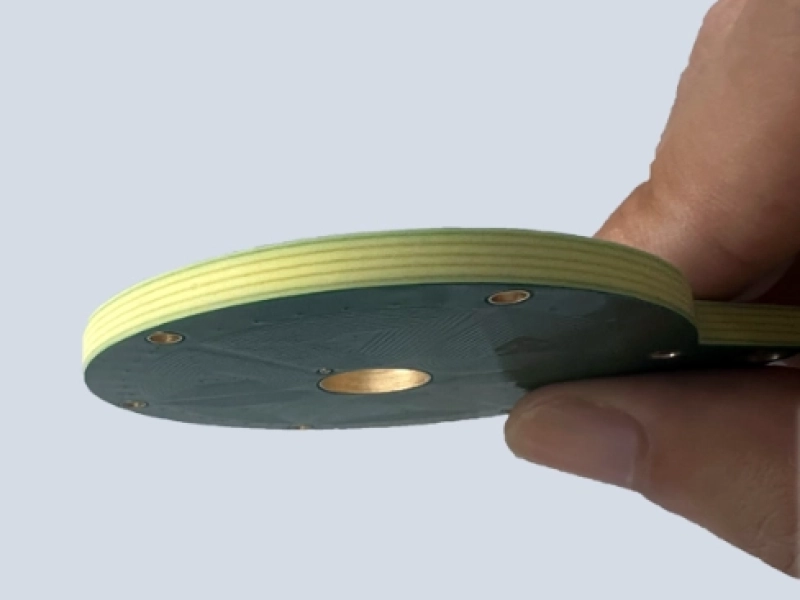
Double-sided Aluminum PCB
A laminate starts softening, warping, and delaminating at the glass transition temperature (Tg). A high-Tg FR-4 circuit board has higher resistance to high temperatures and has dimensional stability in soldering and operation compared to standard-Tg FR-4.
However, this parameter only defines the board’s resistance to heat, not how well it can disperse heat away from the board. Tg value does not make FR-4 thermally conductive like aluminum, and does not substitute for the vertical heat flow that aluminum PCBs boast of.
LED aluminum PCBs are a better choice in applications involving high-power LEDs, densely populated arrays, or enclosed fixtures without sufficient airflow. The boards are also widely used in devices intended for prolonged operation in a steady state since aluminum easily releases heat from the board.
On the other hand, FR-4 may be a good choice for low-power, low-density LED operations. With the addition of thermal vias and copper pours to spread heat, the technology works well for indicator lights and small decorative fixtures.
Generally, FR-4 is ideal when the LEDs don’t produce much heat, with no need for a heatsink or metal enclosure for cooling.
How Aluminum MCPCBs Improve LED Heat Dissipation
Heat generated inside an LED package requires an uninterrupted path to escape the system. In a standard aluminum MCPCB assembly, heat moves from the LED package to the copper layer to which the LED package is soldered. The heat in the system journeys further to the dielectric layer before reaching the aluminum base, then through a thermal interface material (TIM), to the heatsink or metal enclosure, and finally escapes to the outside air.
Every stage of this heat transfer process provides its own quota of thermal resistance, and it is up to the aluminum PCB to control just the initial stages.

A good aluminum core PCB reduces thermal resistance between the LED package and the base PCB, but it cannot compensate for the insufficient size of the heatsink, poor mechanical contact between the heatsink and the aluminum PCB, or lack of ventilation in the enclosure.
Hence, reducing the thermal resistance of the junction to ambient improves brightness stability, color constancy, and longevity of the LED. However, this should not be taken separately because all elements of this chain, including the PCB, TIM, heatsink, and enclosure, work together as a whole system.
How to Select Thermal Conductivity, Dielectric Thickness, Copper Weight, and Aluminum Thickness
Aluminum MCPCB datasheets are often compared with one value – thermal conductivity of the dielectric, expressed in W/m·K. A higher W/m·K value increases the ability of the dielectric to conduct heat, but the effect at the LED will depend on the interaction between the conductivity of the dielectric, the thickness of the dielectric layer, the electrical requirements for insulation, and the power dissipation of the LED. The mounting scheme of the PCB to the heatsink/housing also plays a role in the overall outcome.
A thin, standard dielectric layer, for example, will give better results on a well-designed PCB with adequate housing contacts in comparison with a thicker, higher-conductivity layer, which doesn’t match other characteristics of the system.
Thick aluminum is used on large and high-power PCBs to provide additional stiffness and spreading area. Copper weight, expressed in oz/sq ft, influences the current-carrying ability of the copper layer and heat spreading ability before heat reaches the dielectric layer. Among these listed parameters, the material of the dielectric layer has the largest impact on the thermal resistance through the plane.
Therefore, the dielectric layer is the most important parameter in the selection process, while aluminum thickness and copper weight play contributory roles in the mechanical and electrical properties of the board.
In fewer words, choose thermal conductivity, dielectric thickness, copper weight, and aluminum thickness based on LED power dissipation, board design, and mounting conditions.
Can Aluminum PCBs Be Double-Sided or Multilayer?
The standard construction of an aluminum circuit board has a single circuit layer mounted over the dielectric and aluminum substrate, leaving the other side of the board as bare metal. It is the simplest and most cost-effective structure and can be used in most LED lighting boards, in which the aluminum side of the circuit board will be attached to a heatsink or a housing structure.
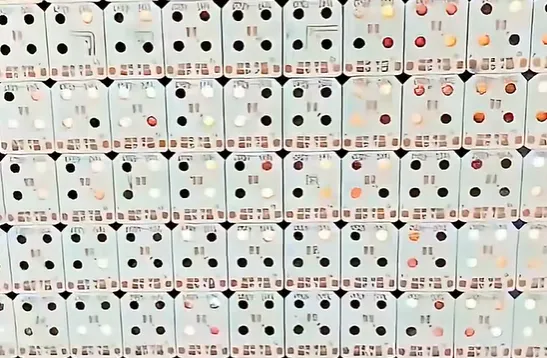
However, multilayer aluminum PCB boards do exist, and they are used in cases when a design requires circuits to be placed on both sides of the board or multiple layers of interconnection between the layers of a circuit board. Multilayer circuit boards significantly increase design complexity, require additional lamination processes, higher registration and drilling tolerances, and increased cost per unit.
In the case of LED products, which include both light-emitting circuitry with more complex driver or control electronics, it is usually more efficient to use two circuit boards: one aluminum board for the LED and another FR-4 board for the controller or connector. This keeps the LED layout simple for heat management, while giving the control circuits enough space for dense routing.
LED Aluminum PCB Design and Manufacturing Considerations
A few design elements have a large impact on thermal performance and ease of manufacture of LED aluminium PCBs. These elements are:
· LED placement and spacing determine the heat distribution across the aluminum layer
· The copper area that influences the current-carrying capability and lateral heat distribution of the board
· Current path and trace width, sized for the actual LED drive current
· Board outline and mounting hole placement, which determines how securely and flatly the board mates with its heatsink or housing
· Dimensional tolerances that dictate the fit within the final fixture
On the manufacturer’s side, a number of considerations apply regarding yield, price, and assembly quality. They include:
· Board outline and fabrication technique used (routing, punching, or V-scoring), for both panel and final outline
· Copper thickness and its impact on etching accuracy and current-carrying capability
· Type and pattern of solder mask applied around LED pads and heatsinking areas
· Choice of surface finishing
· Panelization pattern for efficient assembly and depaneling;
· Total dimensional tolerances needed for mounting and case fitting
What Is an LED Aluminum PCB?
An LED aluminum PCB features three layers, and each layer plays a role in achieving the overall purpose of the board. The first is the copper layer that forms the circuits, pads, and mounting area for the LED.
Under the copper layer is the second layer, a specialized dielectric layer. This layer doesn’t conduct electricity but instead dissipates heat vertically.
The last layer is the aluminum base, whose function is to provide mechanical stiffness to the circuit and dissipate heat effectively.
In some applications, the aluminum layer isn’t involved in the circuit of the LED aluminum PCB since it doesn’t have etched traces and doesn’t conduct electricity. Its only functions are thermal and mechanical dissipation of the heat and giving necessary mechanical stiffness to the PCB to mount, handle, and reflow solder the circuit.
This simple functionality differentiates the aluminum PCB technology from the conventional multilayer PCB.
LED Aluminum PCB Applications
LED aluminum PCBs are often required for efficient and reliable LED lighting across a number of sectors. Common applications are:
General and Commercial Lighting
LED aluminum PCBs are used in high-bay industrial lighting, street lights, downlights, panel lights, and LED bulbs to prevent overheating and dimming.
Automotive Lighting
These boards are used in manufacturing car headlights, brake lights, and dashboard indicators, an application linked due to their vibration resistance and thermal durability.
Power Electronics
LED aluminum boards are also common in power converters, solid-state relays, and motor drives to manage heavy electrical loads.
Medical and Specialized Lighting
Surgical lighting, medical examination lamps, and diagnostic equipment are common applications of LED aluminum PCBs in the medical industry.
Display Backlighting
Display backlighting applications include large computer monitors, television backlights, and telecommunications indicator panels to protect adjacent heat-sensitive components.
LED Aluminum PCB Price
The cost of aluminum PCBs varies significantly depending on a few factors, but budget between $0.50 and $3 per square inch for an average standard design. It is ideal to contact a manufacturer or supplier to get a precise quote for your specific project.
To determine the cost of an aluminum PCB, factor in these variables:
Size
In terms of size, larger PCBs are generally more expensive compared to the smaller ones.
Thickness
Thicker PCBs tend to be costlier than thinner variations.
Quantity
If you’re ordering larger quantities, you should expect a lower cost per unit than when ordering smaller quantities.
Complexity
More complex designs are generally priced higher than simpler designs.
Manufacturer
Many manufacturers tend to have different pricing structures, so discussing your needs with your manufacturer is the best way to confirm costs.
LED Aluminum PCB Prototyping LEARN MORE ABOUT SERVICE
Aluminum PCB prototyping tests your design before full-scale production. It is essential for identifying and resolving design issues and ensuring the final product works as intended.
The required inputs for prototyping aluminum PCBs include:
Gerber files: Digital manufacturing blueprints for board layers
BOM (Bill of Materials): Complete list of the needed components if assembly is needed
Board dimensions: Exact physical size and shape of the circuit board.
Aluminum thickness: The thickness of the metal base layer, commonly 1.0mm, 1.5mm, or 2.0mm
Dielectric requirements: Specifications for the thermally conductive insulating layer between the circuit and the aluminum
Copper weight: How thick is the copper foil layer?
Surface finish: What is the metallic finish applied to the exposed copper
Quantity: How many prototype boards are manufactured?
Solder mask: The color and type of protective coating applied to the board
Test requirements: Instructions for electrical or thermal testing before shipping.
Final Words
The LED aluminum board is a great success in electronic thermal management. Their inherent features make them suitable for use in power electronics with special requirements and high heat generation.
With the assurance of dispersed heat, LED aluminum has gained the heart of designers and manufacturers who cherish efficiency. With the evolution of technology, these boards will gain greater importance in electronics design and manufacturing.
However, when working with a manufacturer, it’s best to choose a professional who is experienced in working with LED aluminum PCBs for the best result. This is why you want to choose Known PCB.
Contact us today.
Frequently Asked Questions About LED Aluminum PCBs
What is an LED aluminum PCB?
An LED aluminum PCB is a metal-core circuit board with a copper circuit layer, a thermally conductive dielectric layer, and an aluminum base. The structure transfers heat away from LEDs while providing electrical insulation and mechanical support.
Is an aluminum PCB better than FR-4 for LEDs?
Aluminum PCB is generally better for high-power LEDs, dense LED arrays, and enclosed fixtures because it provides a direct heat-transfer path. FR-4 can remain suitable for low-power, low-density LED applications when thermal vias and copper pours provide enough heat spreading.
Which material parameter matters most for LED aluminum PCB thermal performance?
The dielectric layer has the greatest effect on through-plane thermal resistance. Its thermal conductivity and thickness must be selected together with insulation requirements, LED power dissipation, copper weight, aluminum thickness, and the board-to-heatsink mounting method.
Can aluminum PCBs be double-sided or multilayer?
Yes. Multilayer aluminum PCBs are available, but they require more complex lamination, registration, and drilling processes and therefore cost more. Many LED products instead use one aluminum PCB for the LEDs and a separate FR-4 board for control electronics.
What files and specifications are needed for an LED aluminum PCB prototype?
Typical inputs include Gerber files, BOM when assembly is required, board dimensions, aluminum thickness, dielectric requirements, copper weight, surface finish, quantity, solder mask requirements, and electrical or thermal test requirements.
References
- Cree LED. (2025). Optimizing PCB thermal performance for XLamp® XQ & XH family LEDs. Application Note. https://downloads.cree-led.com/files/da/x/XLamp-PCB-Thermal-XQ-XH.pdf
- Lumileds. (2024). LUXEON CoB Core Range Series: Assembly and handling information. Application Brief AB115. https://lumileds.com/wp-content/uploads/files/AB115_luxeon_cob_core_range_application_brief.pdf
- Ekpu, M., Bhatti, R. S., Ekere, N. N., Mallik, S., Otiaba, K. C., & Emeka, E. (2022). Thermal effect of cylindrical heat sink on high-power LED applications. Energies, 15(20), 7583. https://www.mdpi.com/1996-1073/15/20/7583
By Amy Jiang
18-year sale engineering experience in PCB industry. A versatile sales engineer with both engineering background and international project experience. She is familiar with HDI, high-speed boards and small-to-medium batch manufacturing requirements. Being capable of quickly understanding the design pain points of customers and providing a one-stop PCB solution from DFM to mass production.
Need an LED Aluminum PCB Quote?
Send KnownPCB your Gerber files and project requirements for a manufacturing review and quotation.Contact Known PCB