
When you send out the same RFQ for an IPC Class 3 PCB assembly project, some suppliers reply fast with a low price, others ask for the exact standard revision, inspection scope, and test plan first.
As a buyer, your real job is to figure out whether the factory can consistently deliver reliable boards on time and on budget, and give you quality records to check.
This article provides a practical guide to evaluate suppliers for IPC Class 3 PCB assembly.
IPC J-STD-001 defines Class 3 for products that need continued high performance or on-demand operation, where downtime is not acceptable and the environment can be harsh. It sets product requirements. It doesn't mean the board will never fail under any condition.You still need to confirm that the design, materials, process, and verification match the actual application.
| Document | What to clarify in the order |
|---|---|
| IPC J-STD-001 | Soldering materials, methods, and acceptance criteria. State the revision, class, and any applicable appendices. |
| IPC-A-610 | Acceptability of electronic assemblies. Use it together with the manufacturing requirements so you are not only judging appearance. |
| Bare board requirements | For rigid boards this usually means IPC-6012 and IPC-A-600. Confirm board class separately from assembly class. |
The mentioned division of standards can be found in the official documentation and public previews provided by the IPC:
IPC J-STD-001 IPC-A-610与J-STD-001 IPC-6012
For high-reliability PCB assembly, ISO 9001 alone is not enough. Look for the industry-specific certificates that match your product. Such as IATF 16949 for automotive, ISO 13485 for medical, or AS9100 for aerospace.

Class 3 has tight limits on solder wetting, voids, and component placement (chip components are often limited to 25% shift).
The line should have:
The PCB assembly manufacturer should be able to trace a problem board back to its specific component reels, pick-and-place machine, reflow profile, and operator. A working MES system that covers people, machine, material, method, and environment is the practical way to do this.
Ask whether the engineers and inspectors (IPQC/OQC) hold IPC-A-610 and IPC J-STD-001 certifications (CIS or CIT). Certificates should be valid and available for review.
You cannot build an IPC Class 3 assembly on a Class 2 bare board. Your bare PCBs must meet IPC-6012 Class 3, which demands thicker hole copper plating and larger annular rings. For turnkey PCB assembly service, review their PCB fabricators, for consigned boards, make sure to order the bare boards to Class 3 yourself.
Risk: IPC Class 3 sets workmanship and visual baselines. It does not automatically include 100% X-Ray image archiving, Functional Circuit Testing (FCT), or environmental burn-in. Leaving these vague leads to disputes upon delivery.
How to avoid: Write the exact standard revision (e.g., IPC-A-610J Class 3) in your contract. Attach clear rules for First Article Inspection (FAI) reports, X-Ray sampling rates, microsection (cross-section) reports for bare PCBs, and ionic cleanliness testing.
Risk: Engineers often lay out pads and via clearances using standard Class 2 rules during R&D. Realeasing those exact Gerbers to a factory for Class 3 mass production often results in high scrap rates or additional costs for rework.
How to avoid: Ask for a thorough DFM (Design for Manufacturability) review at the RFQ stage. Let the supplier's engineers identify any tight component spacing or undersized pads so your R&D team can fix them before production begins.
Risk: Many mid-tier factories list "IPC Class 3" on their brochures, yet 95% of their floor runs low-cost consumer electronics. When they run your high-spec order, frequent production line changeovers, unstable reflow profiles, and relaxed operator habits will likely lead to low yields.
How to avoid: Ask for recent case studies from your specific sector (medical, automotive, industrial) within the past six months. If possible, audit the factory to inspect live production and review historical shipment records. Don't rely solely on the promises of sales representatives.
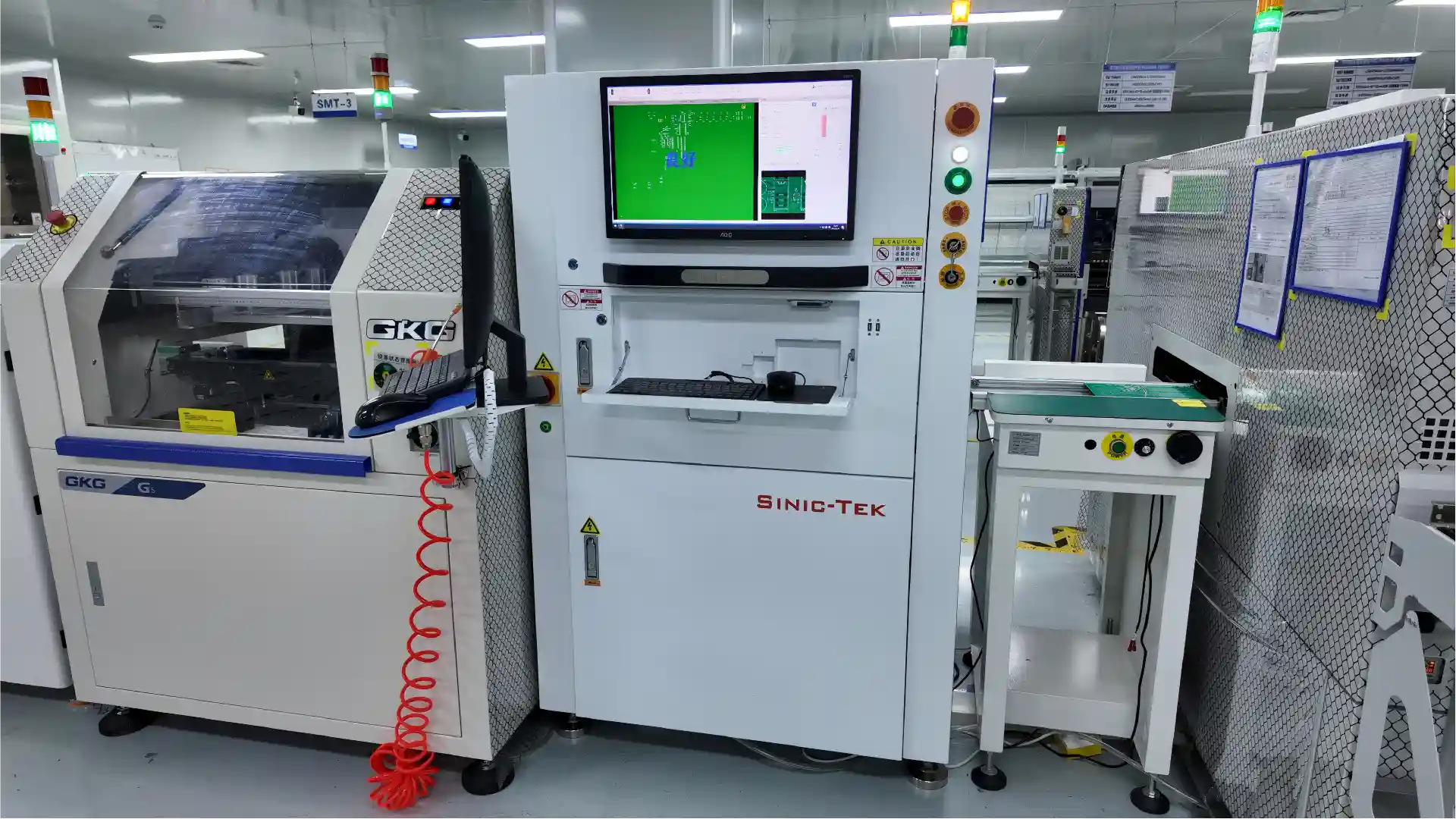
Risk: IPC Class 3 boards are highly sensitive to flux residues and electrochemical migration. Cheap solder paste or excessive "no-clean" residue can cause micro-short circuits in hot or humid environments and result in critical failures.
How to avoid: Specify the brand and model of solder paste (e.g., Alpha, Senju, or Indium) in your BOM. Enforce strict rules for thawing, mixing, and stencil life. If your process requires aqueous or solvent washing, require regular ROSE (Resistivity of Solvent Extract) ionic contamination testing.
Risk: IPC Class 3 assembly involve narrow process windows and strict audits. If your primary supplier has an equipment breakdown, material shortage, or batch defect, your entire project delivery schedule could collapse.
How to avoid: Even during prototyping or low-volume runs, consider an 80/20 or 70/30 order split. Qualify a alternative supplier through prototyping and FAI sign-off so you have a validated backup line ready if needed.
To get an accurate review, send your Gerber files, BOM, Centroid (Pick-and-Place) file, assembly drawings, order volume, target lead time, applicable IPC revisions, and testing requirements to KnownPCB. Once our engineering team has your complete data package, we will review assembly risks, process constraints, inspection scopes, and provide a transparent, itemized quote.
We inspect and accept boards to IPC-A-610 Class 2 unless the customer specifies another class or additional requirements at quote stage.
Yes, for projects that fit our process capability after review. Class 3 work carries additional cost that is confirmed in the project quote.
Yes, we can provide AOI inspection reports.
Yes, we can arrange X-ray based on the package and board design and provide the images.
In most cases we can run basic checks such as shorts, subject to board design and agreed test conditions. Confirm the exact scope before the order.
October/23/2026Medical Sensor PCB Design for Low-Noise Inputs
November/13/2026PCB Etch Compensation and Finished Trace Width
October/23/2026BMS PCB Design Requirements: Sensing and Fabrication
November/13/2026Flying Probe vs Fixture Testing for Bare PCBs
October/30/2026112G PAM4 PCB Design: Baud Rate and Channel Budgets