Blog & Design Guide

A flex PCB supplier evaluation becomes useful when both candidates respond to the same finished construction. A low quotation for a flat single-layer tail cannot be compared directly with a quotation that includes connector stiffeners, shielding, special coverlay openings, and mechanical validation. Identify what each price buys before choosing between the suppliers.
Keep this review specific to FPC. The broader PCB manufacturer evaluation article covers general company and quality evidence. Here, the decision concerns the flexible span, connector regions, material bonds, and handling of the exact circuit being purchased. Those details explain why relevant FPC experience matters even when both companies already manufacture rigid boards.
On this page
Send the flat outline and installed shape together. Identify which regions bend during installation, which move in service, and which remain supported. Include the expected motion and any validation requirements. Otherwise one supplier may quote a construction intended only to fit the enclosure while another assumes repeated movement, with different material and inspection provisions.
Require a returned stackup showing copper, base film, core adhesive where present, coverlay, shielding, local adhesive, and stiffeners. Assign thickness requirements to the correct regions. A single total-thickness value can hide the difference between a free tail and a reinforced connector. Compare proposed layer constructions before comparing the numerical price totals.
KnownPCB's flexible PCB product page is the commercial starting point for an FPC project. Ask for an assessment of the submitted construction rather than combining unrelated extreme values from a capability table. The quotation should name any assumption about materials, geometry, or quantity that could change the manufacturing route or acceptance plan.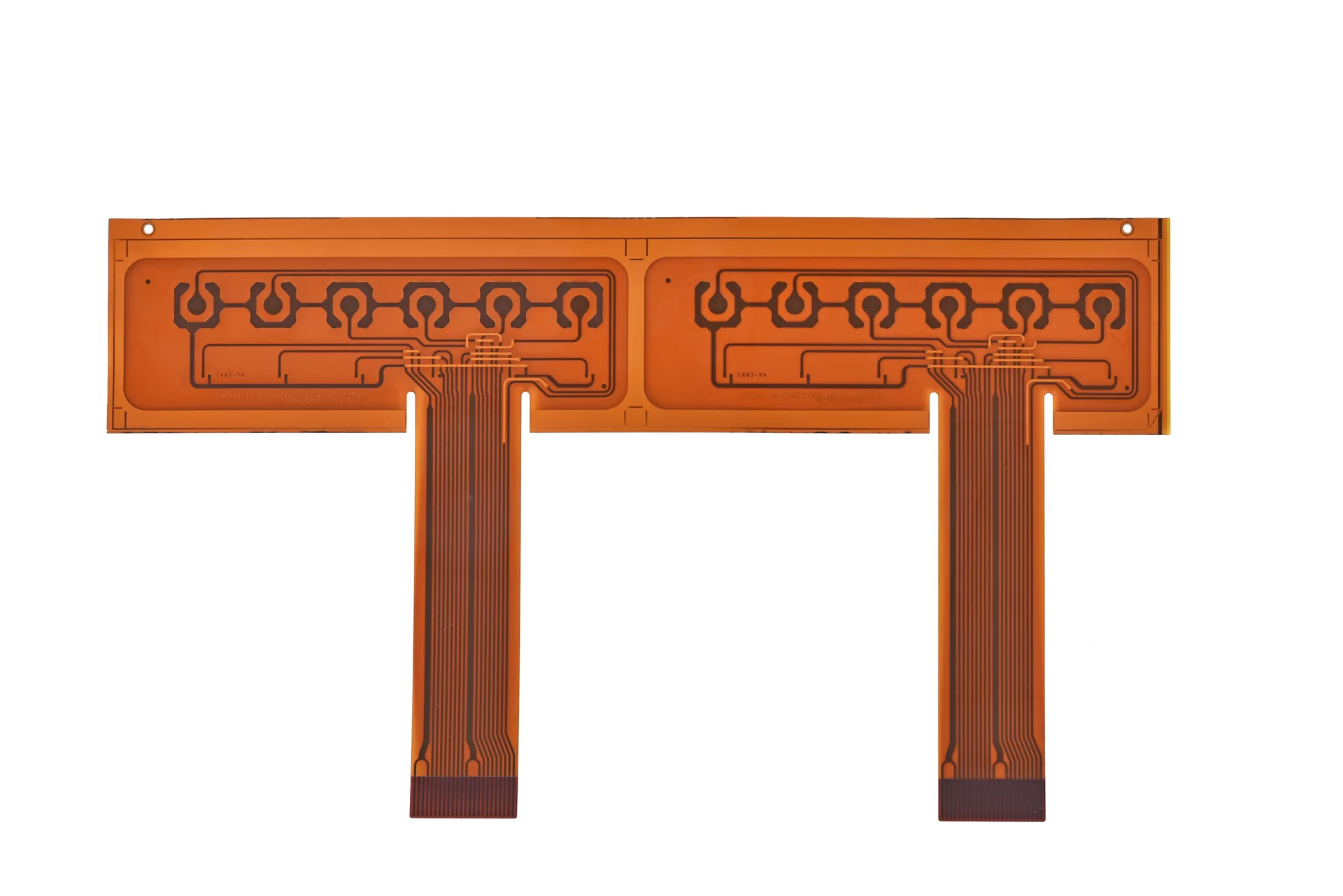
Wide circuit areas and narrow tails can have different support and bending requirements.
The supplier's first engineering response is useful evidence. It should locate concerns on the drawing: a coverlay opening close to a pad edge, a stiffener ending in a bend, or a connector region that needs a tighter thickness definition. A specific response lets the designer decide what to change and gives purchasing a record of the approved scope.
Check whether the proposed edits are carried into the final fabrication files. A supplier may enlarge a coverlay opening or adjust a local support to suit its process. Review the effect on exposed copper, contact fit, bend length, and electrical clearances. Approval of a quote should not silently authorize artwork changes that the design team has never seen.
Use connector handling as a separate review item. KnownPCB's FPC assembly-detail article discusses insertion marks and handling concerns. Ask the candidate to review contact orientation, stiffener support, and the way the circuit will be fitted. These details belong in a finished-product review even if the bare-board netlist is straightforward.
A material certificate identifies a laminate or other supplied material. It does not by itself show how the completed circuit behaves after etching, plating, coverlay lamination, assembly, and installation. Ask which records identify the materials used in your lot and which tests, if any, address the finished construction. Do not treat the two record types as interchangeable.
The public IPC-4204B scope and classification information describe flexible metal-clad dielectric materials. Its separate identification of base film, adhesive, and metal cladding is useful when checking a material proposal. A material classification is one part of the purchasing definition; the installed mechanical duty still requires its own description and agreed evidence.
If a candidate claims a flex-life result, ask for the sample stack, bend radius datum, movement path, test environment, and electrical monitoring method. Compare those conditions with your design. A different sample can demonstrate experience, but the supplier should explain why that experience applies. An unexplained cycle count is a weak basis for approving a moving interconnect.
Choose samples that represent the features most likely to affect the purchase. A connector region can be checked for fit and support. Coverlay openings can be compared with the approved artwork. A production panel can show how the supplier handles repeated circuits and identification. State these objectives before requesting samples so that an attractive unrelated board does not become the default evidence.
The panel photograph shows repeated flexible circuits before separation. It is useful for discussing layout and identification through fabrication. It cannot verify internal material bonds or service fatigue performance. Ask for the relevant record or test when those properties affect the decision, and tie the evidence to an identifiable sample revision.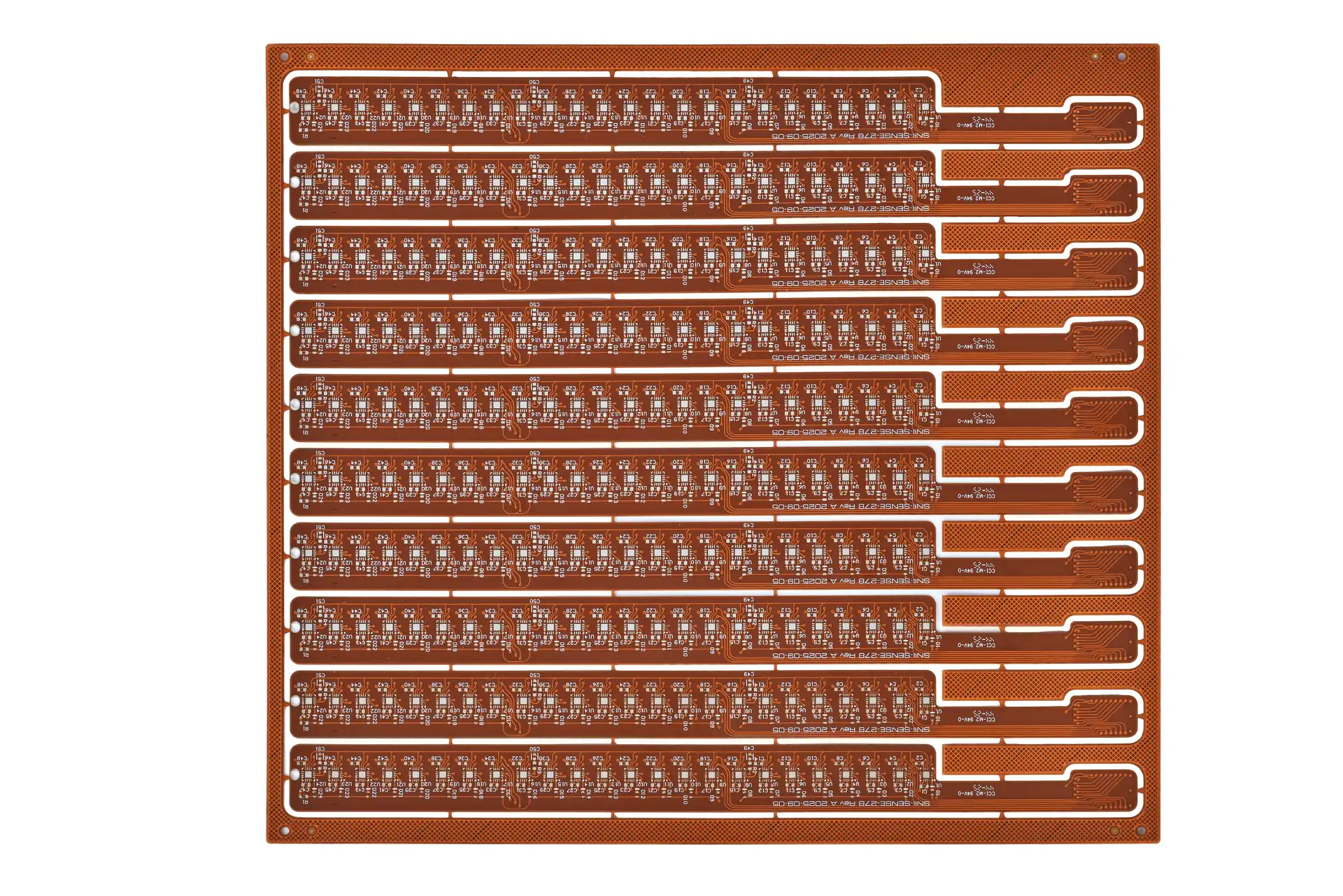
A flexible circuit panel shows the flat manufactured layout, before installation into an enclosure.
For first articles, agree the inspection plan before the order. Define which dimensions are critical, how thickness is measured at connector regions, what visual requirements apply, and which destructive checks are included. Specify how supplied reports identify the batch. A vague request for a full report often produces paperwork that omits the characteristic the buyer needed to control.
A successful prototype can use a different panel, material stock, or handling route from later production. Ask what will change when quantity increases and how the supplier will review that change. The answer should connect the approved construction to the production route, with notification for changes that affect fit, bending, electrical behavior, or inspection evidence.
Check traceability and escalation together. Identify who can trace a delivered circuit to the material lot and production records, who assesses a failed sample, and how affected stock is handled. Packaging also deserves a defined requirement because a circuit can leave fabrication in acceptable condition and be creased during packing or unpacking. Show the supplier how parts will be received and installed.
ISO's supply-chain explanation of ISO 9001 makes clear that management-system conformity does not replace a statement of product conformity. Review the certificate scope where it matters to purchasing, then return to the agreed FPC drawing and acceptance evidence. A certificate does not define the connector fit or motion requirements that the buyer left out of the package.
The purchasing decision should name the accepted stackup revision, critical dimensions, validation work, report set, and permitted substitutions. List unresolved items separately with an owner and a release condition. A supplier with an honest qualification proposal can be easier to assess than one that accepts everything without defining what its acceptance means.
Once those differences are resolved, compare price, schedule, and repeat-order terms for the same scope. Include tooling, extra samples, and any agreed outside testing. To obtain a comparable proposal, send KnownPCB the finished FPC requirements together with the flat data and installed shape. The resulting quotation should identify the circuit being approved and the records that will accompany it.
Proven by 7 industries, 4000+ customer projects
Please contact us at sales@knownpcb.com, ask for engineering support here or use the form below to reach out to KnownPCB | Request a Manufacturing QuoteInclude your quantity, target delivery date and key requirements. File handling and NDA information. |